Travel Buzzwords
I Want to Die

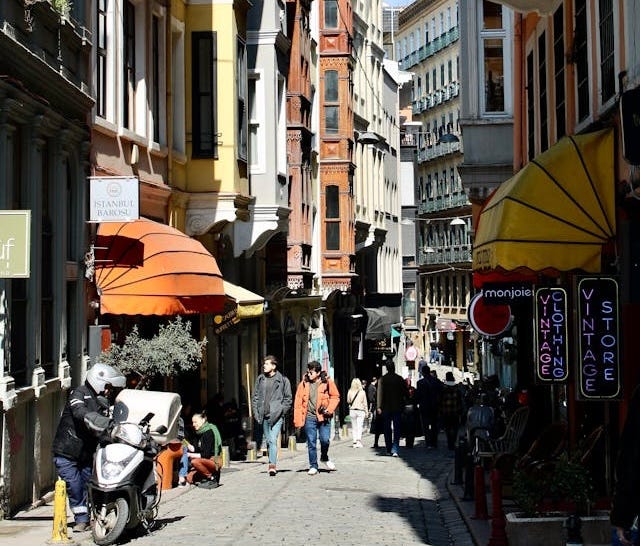
How we describe the places we visit has impact. Our words influence how we perceive destinations before we arrive as well as how we interact with them while we’re there.
All human interaction is an exchange. When we travel, as guests, we get the privilege of collecting stories and experiences, hearing new languages, learning about cultures and ways of life from locals that otherwise may have remained unknown to us. The exchange, for locals, is access to the socio-economic benefits of tourism money spent in their country. Although, it is important to note that this exchange is rarely fairly balanced and always more complicated for the local communities than the tourists. In places experiencing over-tourism this exchange has become so unbalanced as to be detrimental, but that needs its own article. One thing is certain, the way we speak about these interactions often reveal individual opinions, ethics, morals, and prejudices, and all of these leave their mark.
One of the greatest joys of travel is sharing what we’ve been lucky enough to experience. These come in many magical forms: stories, photos, postcards (if you’re feeling a bit analogue). Sharing these with friends, family, or even strangers online allows us to hear their gasps, see the incredulousness, glee, or jealousy on their faces, and read the comments expressing delight and envy that sit under our perfectly curated and edited holiday snaps, and, in essence, there is nothing wrong with this. I, for one, heartily argue that travel stories are meant to be shared. But in recent years, the way certain places have been described, and how and what we have chosen to share, has become problematic.
As someone who has worked in tourism for a decade, and specifically at the intersection of travel and sustainability as well as in historically sensitive sites like former Nazi Concentration Camps, I have seen and heard more than my fair share of problematic behaviour and rhetoric from tourists. I have seen the real-life impact and damage that those actions and words have, and I know I’m not alone in noticing and being concerned by it.
Instead of keeping these to myself, I’m generously, and very much cathartically, sharing them with the world. Lucky you, dear reader. My top offending terms are in no particular order and each is accompanied by a short paragraph, or perhaps ‘rant’ is a more accurate description, justifying why I believe it to be problematic in terms of its influence on travel. This article is for those tired, curmudgeonly tourists, like myself, who are simply exhausted by the current way travel is presented in many media forms. Welcome. Enjoy and feel free to join in, either out loud as you read or in the comments below. Let’s begin.
‘Cheap’
This one gets me so riled up that a few months back I wrote an entire piece about the use of this exact word. My main issue is that it’s highly subjective. What is ‘cheap’ to one person, is unattainably expensive to another. By continuing to use the word ‘cheap’ as if it is a universally experienced standard is one-sided and ignorant. Whether this ignorance is intentional or unintentional impacts how much frustration I feel toward the user. Like any term or phrase, if the speaker is a local coming from inside a destination then there’s no real problem with the word ‘cheap’; if the speaker is a tourist coming from the outside then that’s where it becomes problematic. If you want a more nuanced breakdown of why I argue this, feel free to read my full article ‘Oh My God, It’s So Cheap Here: The Price and Privilege of Travel’.
‘Hidden Gem’
I will fight you. That’s my feeling on this one. A swift, if not immediate, resort to violence. Did you know that, when travelling, you don’t need to share every meal, hotel, flight, or experience? You can just go, have fun, post little to nothing, and come home with incredible stories and photos to share later. I ask, ‘did you know’, because too many people seem to be unaware of this. There seems to be this permeating idea that if it’s not on the clock app or The Gram, then it didn’t happen. I promise you, it did. You’ve got the receipts and overdraft to prove it.
My problem with this one is that, as a visitor, that little restaurant or café you thought you found is probably quite popular with locals. If enough people jump on the I-went-to-the-hidden-gem bandwagon and post about it (and enough people do) then that place risks becoming overrun. For locals — the people who built that place up over time with their hard-earned money to make it the desirable hotspot you’re so keen to post about — it can result in their being unable to go there.
The bigger problem, and one that we are seeing more often, is that because the rate of social media trends is meteoric, independent businesses can suffer badly or go under when they’re no longer the centre of a trend. Sudden popularity creates new business pressures, such as rising operational costs, like higher stock intake or the need for more staff to cope with demand, and increased bills. This might be manageable, but I do stress might, when custom is consistent. However, when the business is no longer flavour of the month because the next ‘hidden gem’ is highlighted by influencers, the results can be devastating.
I’m still a strong supporter of putting our tourism money into local businesses but I try to, and encourage others to do the same, proceed with caution and conscientiousness. When in local businesses, make them the centre of attention, never you. If you’re unable to do that, then you were never doing it for the benefit of local businesses, you were doing it for personal attention. And as the ‘we’re doing so much for small businesses’ is a common argument for influencers and travel writers to continue using this damaging language, I’m calling bullshit.
‘Discovered’
You did not discover it. You are not fucking Magellan. The locals who call your travel destination home worked tirelessly to develop, build, and run that local business. The owners have spent their blood, sweat, tears, and savings to broker and nurture relationships with the local community to make their business accepted. The locals have deemed this local business worthy of being part of their community with their custom and support. You’re an outsider who went for a meal, coffee, or drink and liked what you tasted. You discovered nothing. Stop trying to be the main character in someone else’s story. Pay your bill in full, leave a good tip (if customary), say a heartfelt ‘thank you’ in person to the workers or owners, leave a positive review, and share it with others without making yourself the centre. Also, always remember to ask permission to film and photograph, and respect the answer if it’s ‘no’.
And I will not be accepting the ‘but influencers bring in so many customers’ argument. We’re past that because we know the damage they can and do cause, and how many of them are just in it for freebies, tax write offs, and their 15 minutes of fame. Please stop defending them. There are ways of sharing travel stories and experiences online without doing harm (see above suggestions), and currently, we’re seeing too many people do it in detrimental ways. We’re done. Well, I’m done. You may disagree.
‘Third world/developing country’
These two are tricky. The main reason I find them tricky is because they have, over time, become synonymous with each other and are, often, used incorrectly. ‘Third world’, although thankfully rare now but unfortunately still actively used by some, has its foundations in a way of divvying up the world and describing certain sections with linguistic foundations based in colonialism. Specifically, the term was coined in 1952 to label countries that weren’t aligned with either the United States (First World) or the Soviet Union (Second World). During the Cold War, it was all about these two superpowers so they, and those aligned to them, dictated how everyone else was labelled. For obvious reasons, the term ‘Third World’ is considered outdated, and for logical reasons, overly-simplistic and offensive. Just get rid.
‘Developing country’, while also founded in colonial rhetoric, is currently the go-to for many industries, economic, political, and academic institutions, and media. It’s far from ideal but it appears that, collectively, we’re struggling to detach ourselves from it. ‘Developing country’ refers to a country which has a lower average standard of living in comparison to others, according to the Encyclopaedia Britannica. Some of the qualifiers or standards taken into consideration when assigning the label of ‘developing’ are having smaller economies, more corruption, less functional governing bodies, lower life expectancy, lower literacy rates, higher rates of infant mortality, and weaker approaches to human rights, amongst others. While this is an academic definition, it is, arguably, impossible to remove political, economic, and historical abuses from this label. Past actions between countries, or against some countries from others have direct and indirect impacts on the standards of living currently being experienced in certain places. While some might say that, as a travel writer, I should leave politics out of my articles and the topics about which I have chosen to write and focus solely on travel, I say that it is not only impossible, but unhelpful. Seeing as modern travel (needing passports, visa requirements, certain amounts of money, etc.) is both political and economic, it is not only integral to travel writing and tourism, but essential to talk about openly to ensure we are travelling as safely and conscientiously as possible, for the sake of both tourists and locals. While I believe that we are in need of a better alternative to the term ‘developing country’, I doubt it’s going anywhere any time soon. What I think we can do, starting now, is to be more careful and intentional with our usage of ‘developing’. Never use it without doing proper research, or as a lazy placeholder, SEO keyword or hashtag to boost a post, or to undermine the culture and history of a specific country when comparing different places when speaking or writing about travel, as an activity, and tourism, as an industry.
If you’re struggling to find better alternatives, my suggestion is to simply use the name of the country you’re describing or wishing to talk about. It’s not that difficult.
‘Expat’
I know I’ll get pushback on this one, and that’s fine. I firmly believe that everyone is entitled to their own opinion but that opinions are not the same as facts. I’m not required to agree with your opinions, just as you are under no obligation to agree with mine. For those who hold onto the term expat, I would like to know why? Did you not emigrate from one country and immigrate to another? If so, then my question to you is this ‘why don’t you just use the word immigrant?’. It’s my opinion that, inherently, we know there’s a difference in how people interpret and react to the labels ‘immigrant’ and ‘expat’.
If you think I’m talking shite, fair enough, but humour me with a wee experiment. It’s a game I call Association. I want you to take a moment and clear your mind. Ready? Ok. Now, I want you to say the word ‘immigrant’ out loud. For most people, an associated image will conjure itself in the mind. What image presents itself in yours? Think sex, skin colour, hair and eye colour, clothing, age. Who are you picturing? Now, I want you to clear your mind again, or at least distract it — think about what you’re going to have for dinner, that household task you need to complete, your favourite film. Ok? Ready? Now say the word ‘expat’ out loud to yourself. Once again, an image should pop into your head, or at least start building itself. Who do you see? What’s this expat’s age, accent, skin colour, age, hair and eye colour, how do they dress, where do they come from?
Are these images the same? I’m willing to bet all the money that a person far wealthier than I am has that for most of us, these images are different. ‘Expat’ is a privileged term, ‘immigrant’ is not. And for anyone who insists on calling themselves an expat, I need you to understand, you are simply an immigrant with better PR. This is coming from a straight, white, half-American, half-British woman who has lived in a country that doesn’t match either of her birth-given nationalities — we are immigrants, plain and simple. And before you start arguing with me in the comments, please ask yourself why you are so adamant in not labelling yourself as an immigrant. Is it because perhaps you know that if you do the treatment you receive, particularly in the media and public eye, will be different, negative, or not in your favour?
We Need to Do Better
These conversations are rarely easy or palatable. They require a generous amount of honesty and self-reflection that can bring discomfort. However, the way we speak about the destinations to which we travel is too important for us, as tourists, to not make a concerted effort to do better. If every tourist spoke respectfully and realistically about the destinations they visited, I genuinely believe that some of the most damaging and negative of tourist behaviours would begin to correct themselves. The results for our most beloved holiday destinations would be dramatic and, dare I say, overwhelmingly beneficial. Imagine local communities, not over-run by wannabe travel influencers, but rather visited by tourists who spent more time, effort, and money in them, not for online clout and attention but because they believed these places, their histories, their cultures, and their people, were worth it.
As someone who is deeply and passionately in love with travel and everything that it has given me, I can only imagine what an amazing world that would be.
Before I read this piece, my Substack was titled, “An Expat’s Thoughts on Life”. It is now titled, “An Immigrant’s Thoughts on Life”. It now feels both strange and correct.
Thank you.
Thank you for this post :) These are all important “buzzwords” that we as writers should think twice about before using!